Pedagogy before hardware
Every resource serves planning, explaining, testing and improving.
Computational thinking · Scottish primary · P1–P7
A hands-on, screen-light learning system that brings computational thinking onto the table—then uses digital tools only where they add real value.
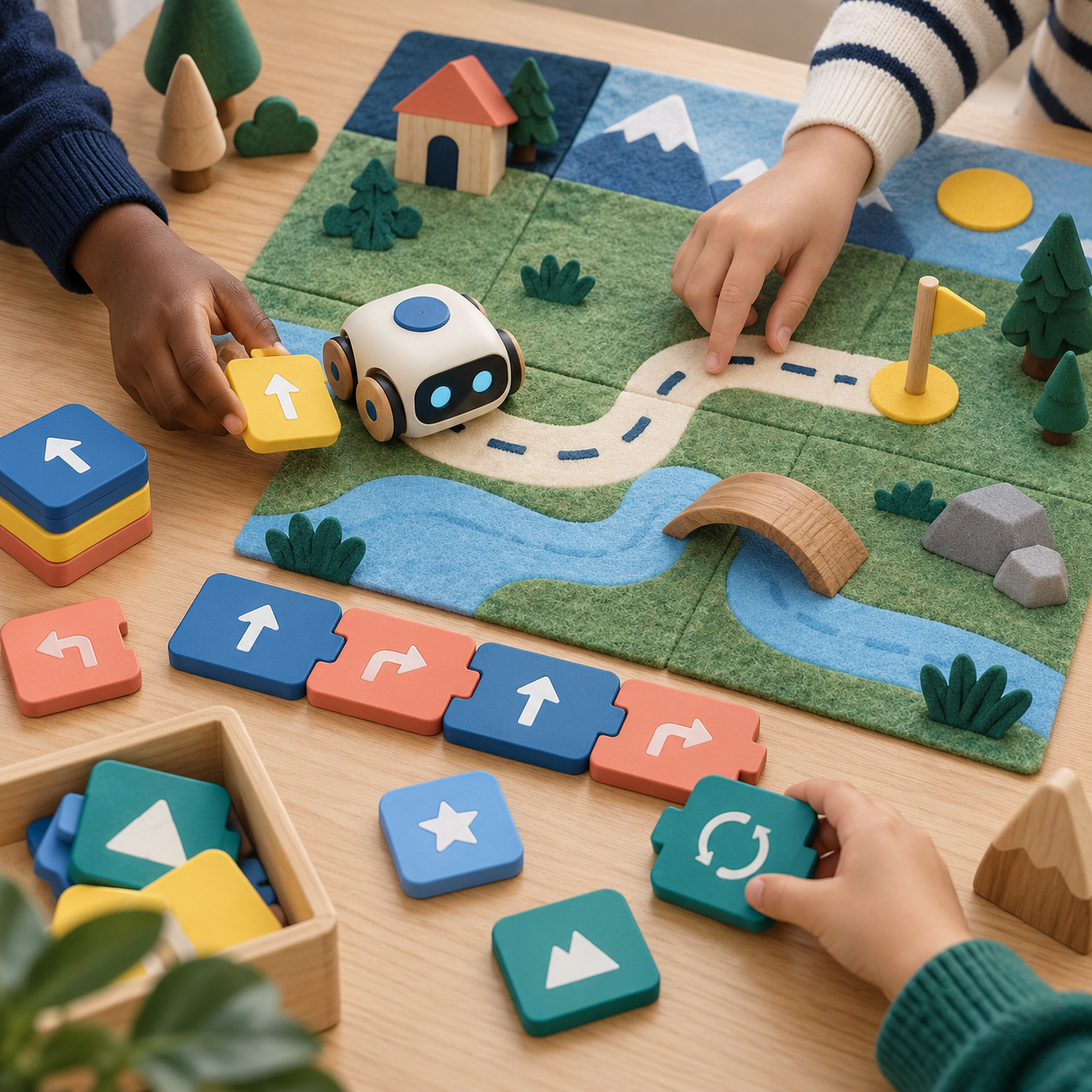
Our classroom promise
The Tangible difference
A complete path connects physical learning, inclusive participation, teacher decisions and evidence-led improvement. The value is in how these parts work together—not in one device.
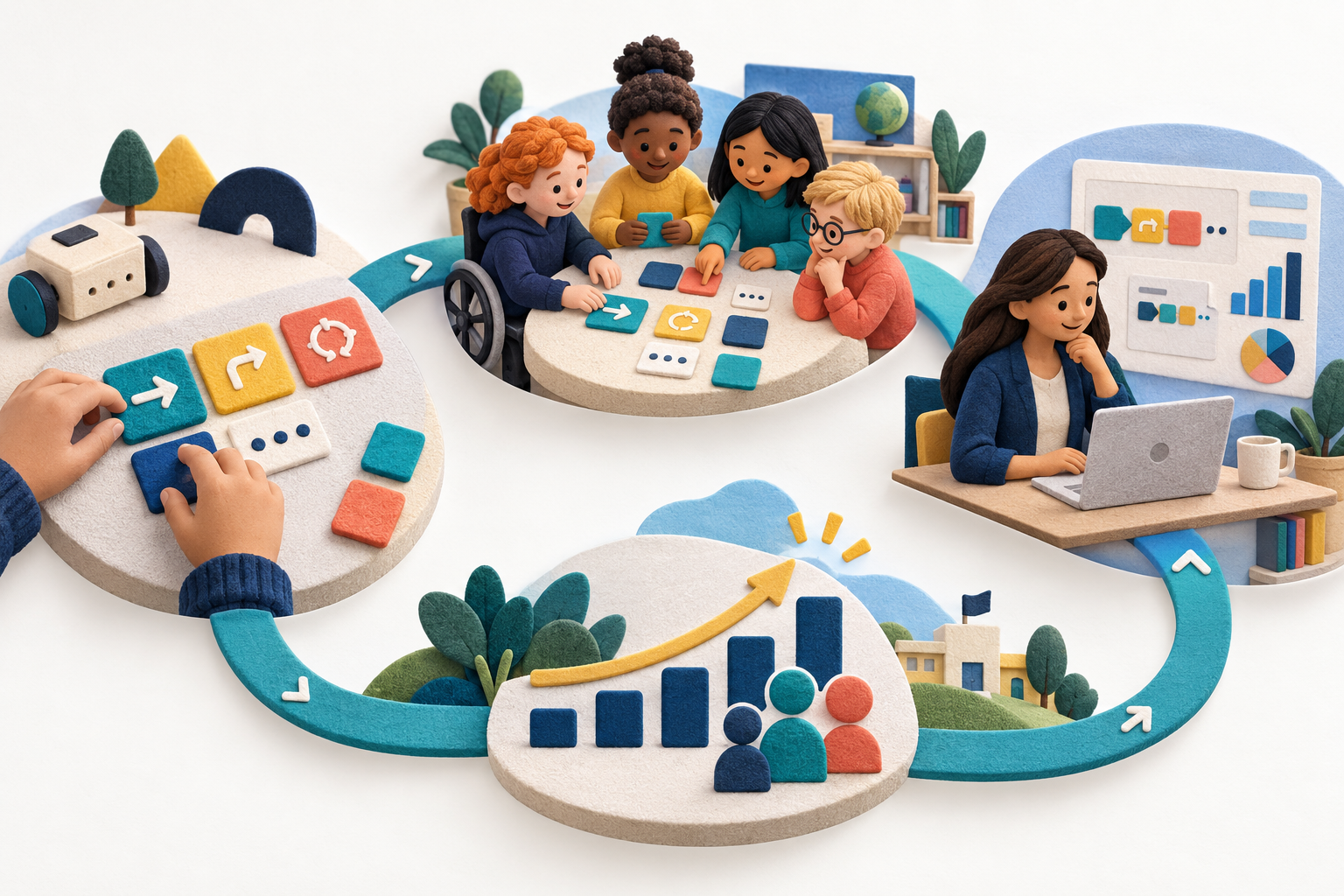
Every resource serves planning, explaining, testing and improving.
Physical sequences and shared roles create visible ways into the task.
Digital and AI-assisted tools propose and support. Teachers decide.
Classroom evidence guides what improves and scales.
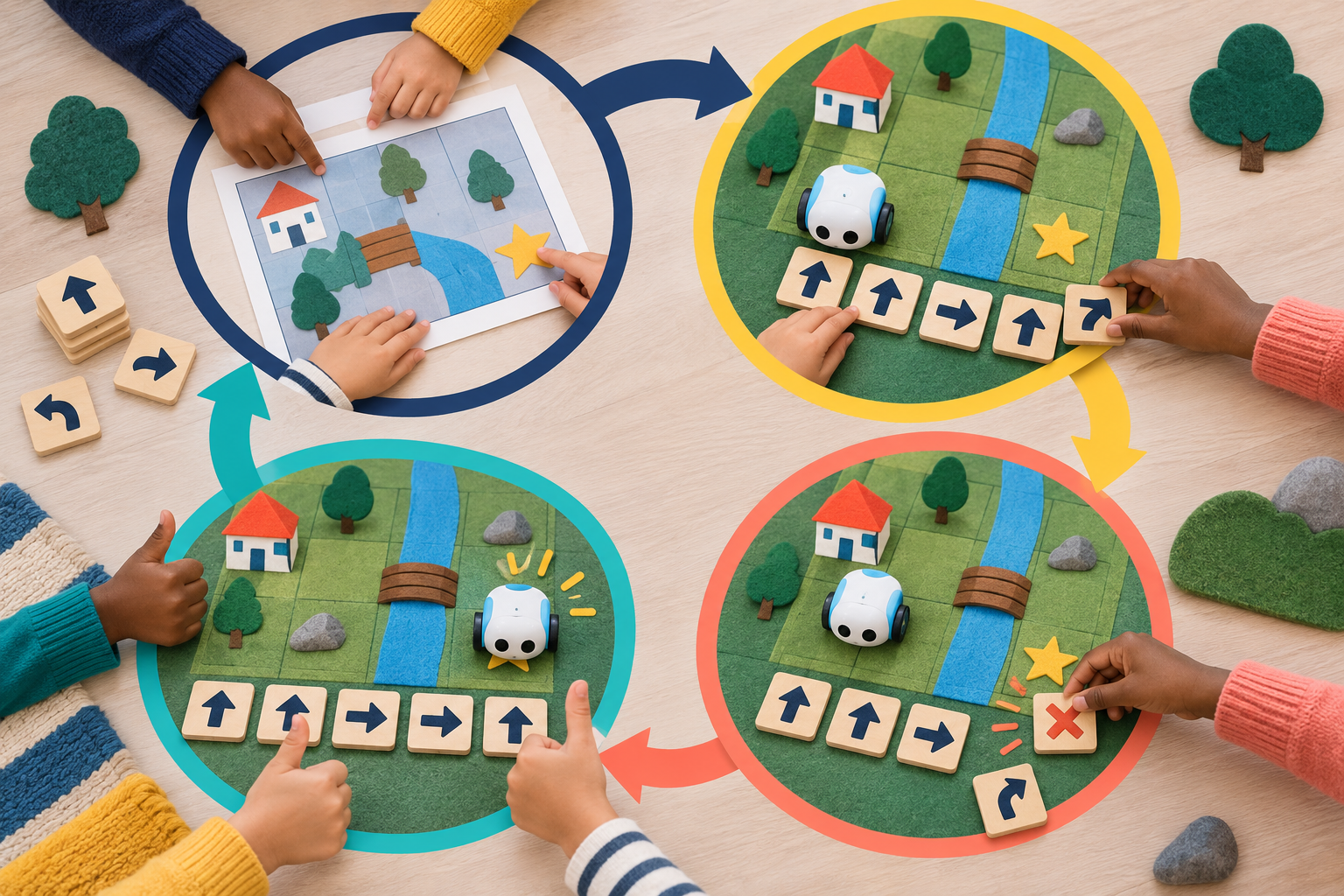
The Tangible Learning Cycle
Children do more than follow commands. They agree a plan, build and explain a sequence, test it, find the error and improve it together.
Understand the mission and agree an approach.
Arrange instructions and talk through the logic.
Try the sequence, spot what changed and repair it.
Explain the learning and strengthen the solution.
Screen-light, not anti-technology
Children reason with tiles, mats, stories and shared roles. Robots make a sequence testable. The Tangible Coding Studio helps teachers adapt and organise learning. Bounded AI may support proposals—but never replaces professional judgment.
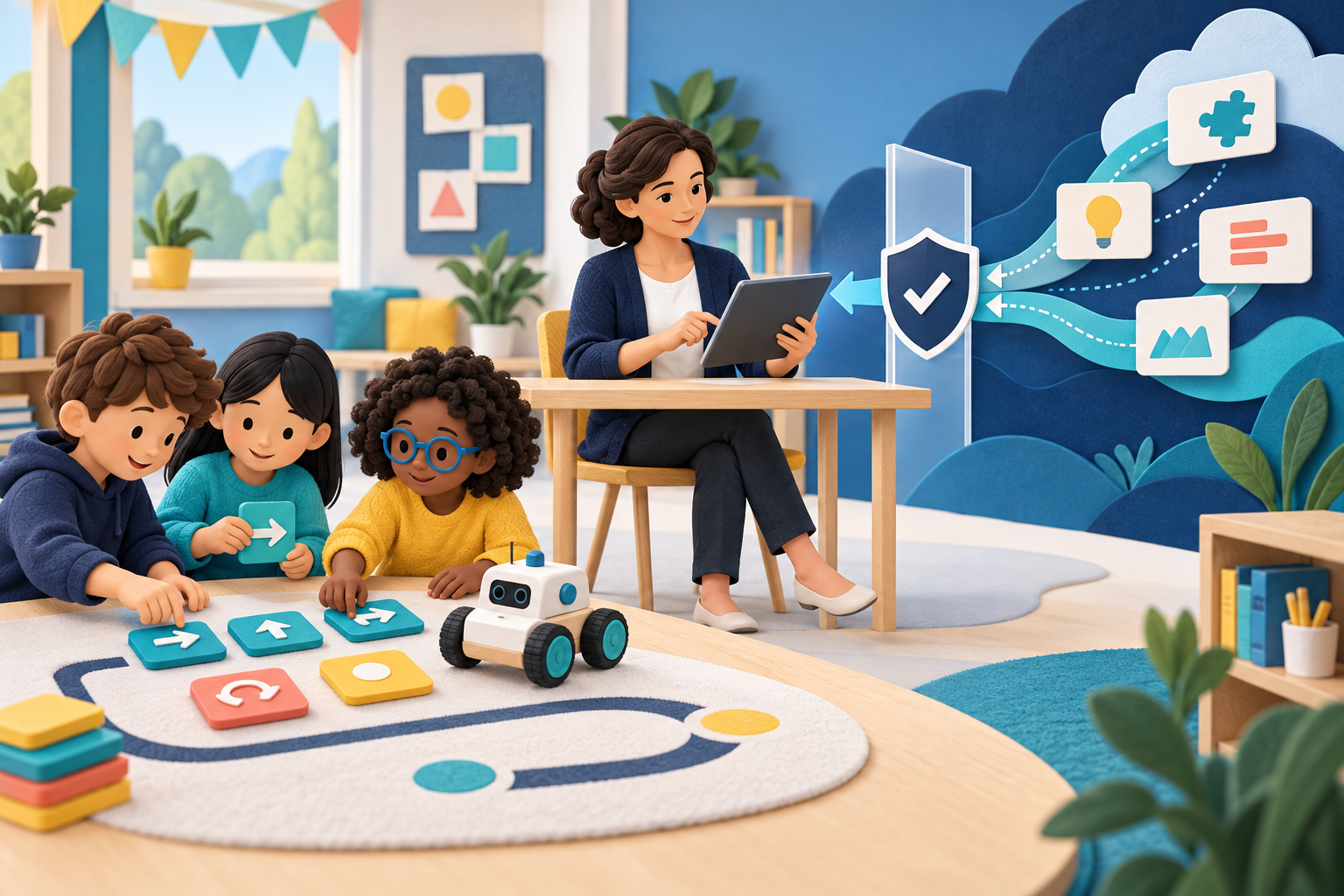
Pupils move, discuss, sequence and debug together.
Teachers prepare, adapt and review missions.
Optional proposals, checked and approved by the teacher.
For schools
Whether you need better use of existing robots, more inclusive participation, staff confidence or a screen-light route into computing, the starting point should fit your context.
Build your school requestEvery pupil has a meaningful way to contribute.
Mistakes become visible, discussable and useful.
Curriculum missions, guidance and support fit real classrooms.
School Fit Checker
Choose what you can see in your school. Your answers become clear wording you can review and send—without starting again.
Your suggested starting point
Evidence & case studies
We publish claims only when evidence supports them and participating schools have reviewed the account.
Who joins in and how roles are shared.
How pupils sequence, explain, test and improve.
How groups communicate and build a solution.
Preparation, curriculum fit and confidence to teach again.
Tangible Coding Knowledge Hub
Research, classroom practice, responsible AI and carefully selected EdTech work—presented in the format that makes each idea easiest to understand.
5 min readArticle
How physical reasoning and purposeful digital tools strengthen one another.
Choose the right medium: shared physical thinking for pupils, useful digital support for teachers and robots where feedback matters.
One-page infographic
A visual guide teachers can save, print or share with colleagues.
Video · 2:30Video
A short classroom introduction with a visible thumbnail and clear source.
Curated links
Research, practitioner work and EdTech links—each with a short explanation.
Working on a related idea? Suggest research, a project or classroom practice for review.
Suggest a resourceYour useful first enquiry
If you used the Fit Checker, your request appears here automatically. You stay in control of every word.